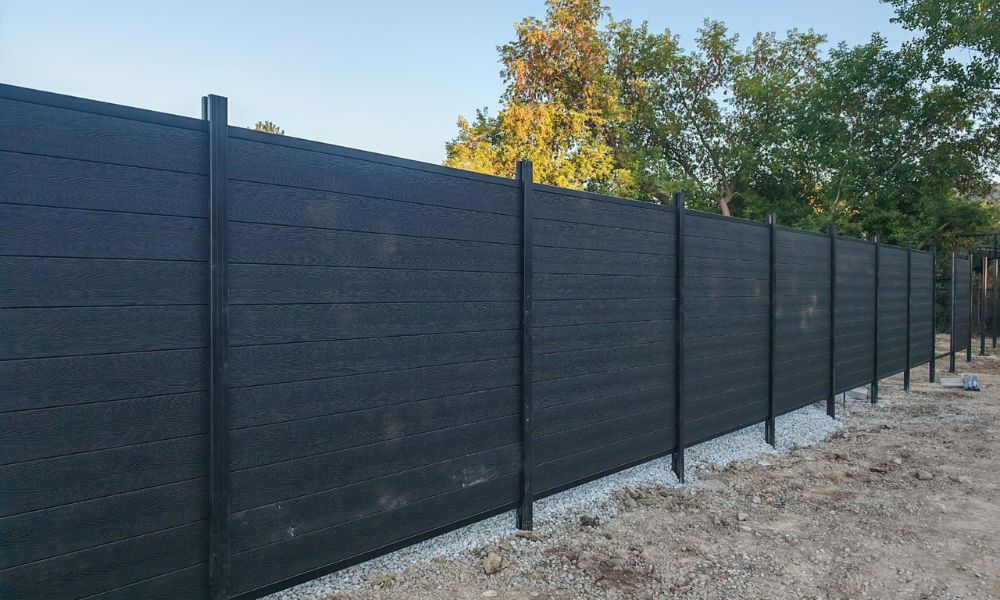
Composite Fencing
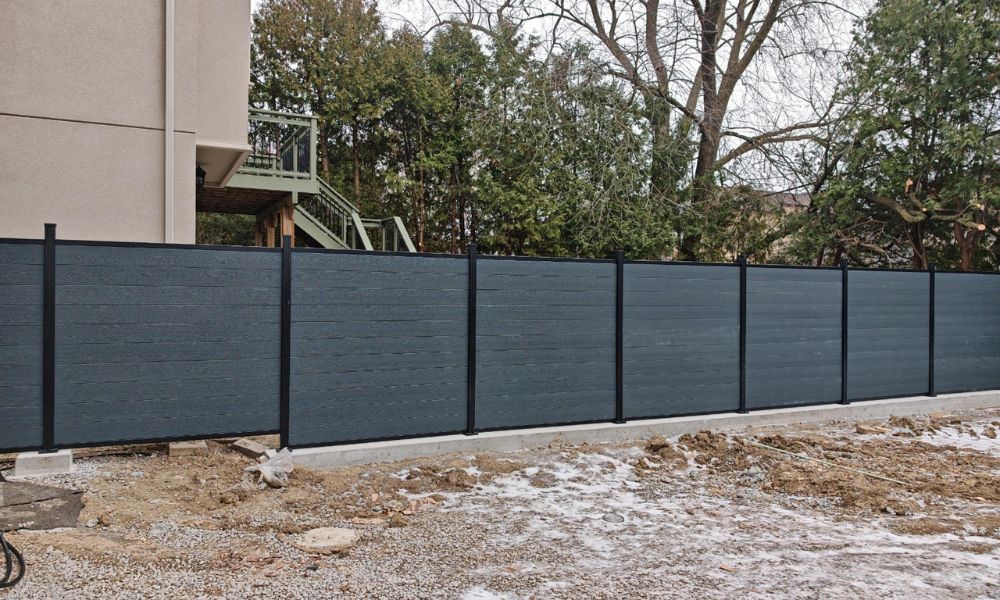
Composite Fence
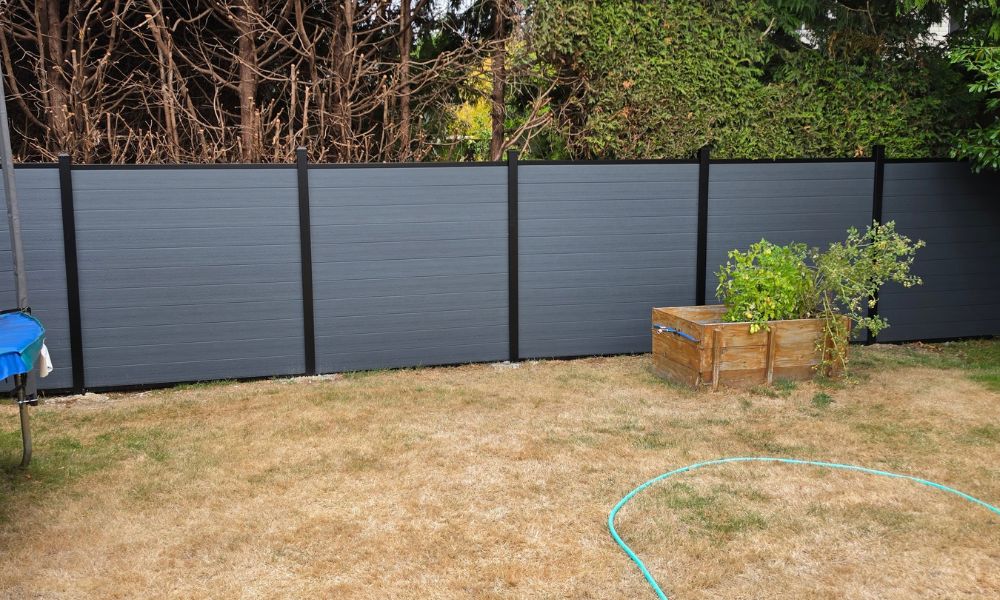
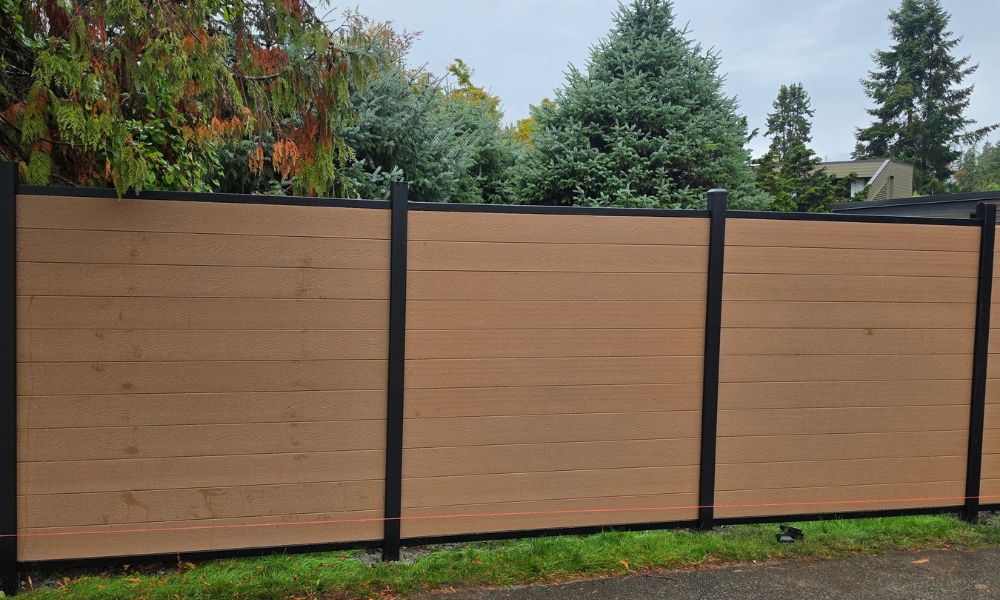
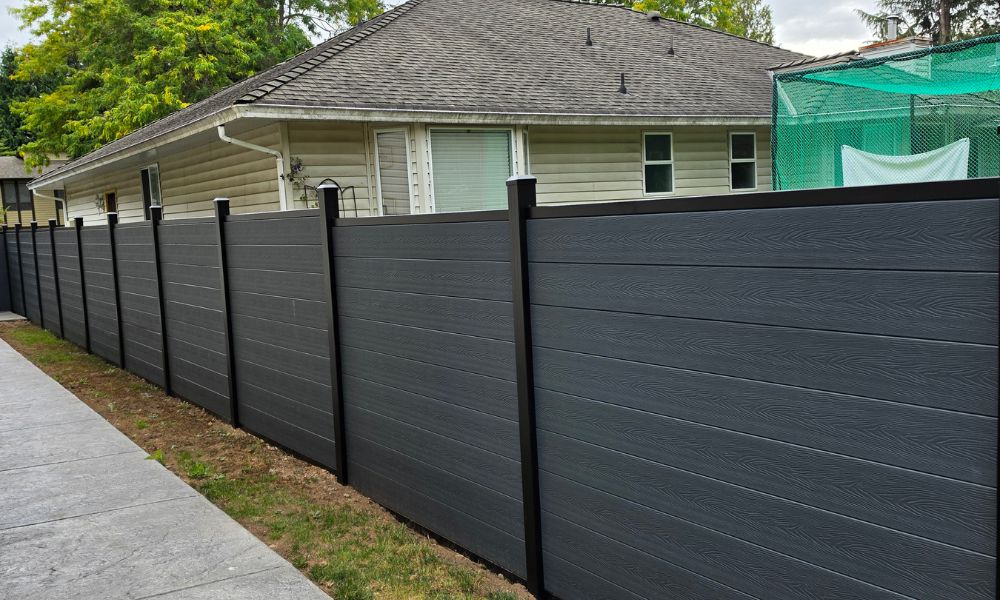
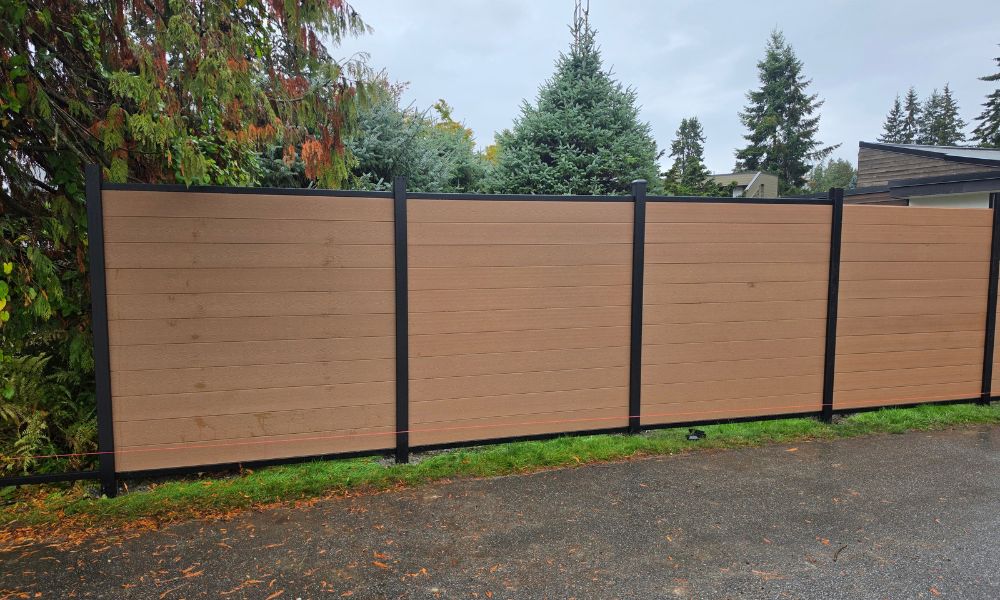
A composite fence is a durable, low-maintenance fencing option made from
a blend of recycled wood fibers and plastic polymers. Designed to mimic
the appearance of wood without the need for staining, painting, or sealing,
these fences are resistant to rot, insects, and warping, offering a long-
lasting, eco-friendly, and modern aesthetic, typically lasting 25–30 years.
Key Features
- Material Composition: Typically consists of a mixture of wood flour (sawdust) and plastics like high-density polyethylene (HDPE), often bonded with resins and UV inhibitors.
- Maintenance: Unlike wood, it never requires painting, staining, or sealing. Most owners simply wash it occasionally with soap and water to remove dirt.
- Longevity: Resists extreme weather, fading, and moisture damage better than traditional wood. Most composite fences last 25 to 30 years, significantly outperforming the 5-10 year lifespan of standard wood fences.
- Eco-Friendly: Mostly made of 95% recycled content, such as plastic milk jugs and reclaimed timber, making it a popular choice for sustainable landscaping.
- Variety: Available in various colors and finishes, allowing for diverse, stylish designs.
Structure
Composite fencing often uses a tongue-and-groove system that slides between posts, sometimes including a co-extruded plastic cap for enhanced protection against UV rays and moisture. While they have a higher upfront cost, their longevity makes them a cost-effective choice over time.
Pros and Cons
Advantage
High Durability: Resistant to rot, mold, and termites.
Aesthetic Retention: Holds its colour better over time due to UV- resistant coatings.
Easy Installation: Many systems use a " slide and stack" design with lightweight panels.
Disadvantage
Higher Initial Cost: Can be significantly more expensive upfront than wood.
Thermal Expansion: Boards can expand and contract in extreme temperatures, requiring precise installation.
Limited Customization: You generally cannot paint or stain them if you want to change the colour later.
Images Of Composite Fencing
Bhinder Fencing